 Tribute to Apollinaire, Nerval & Lautréamont: Masters of Spleen & Fantastic
by FPDieulois :: 2026-07-07
French literature has always had a fascination with the darker corners of the human soul.
3 singular poets stand out as its most brilliant explorers of spleen (profound melancholy),
the fantastique (the supernatural and dreamlike), and folie (madness):
Gérard de Nerval, Comte de Lautréamont, and Guillaume Apollinaire.
Each pushed the boundaries of poetry and sanity, leaving behind works that continue to disturb, enchant, and inspire.

Gérard de Nerval (1808–1855): The Romantic Dreamer Lost in Madness
Gérard Labrunie, known as Gérard de Nerval, is the archetype of the tormented Romantic.
After a passionate and unhappy love affair with actress Jenny Colon, he descended into mental illness, spending time in asylums.
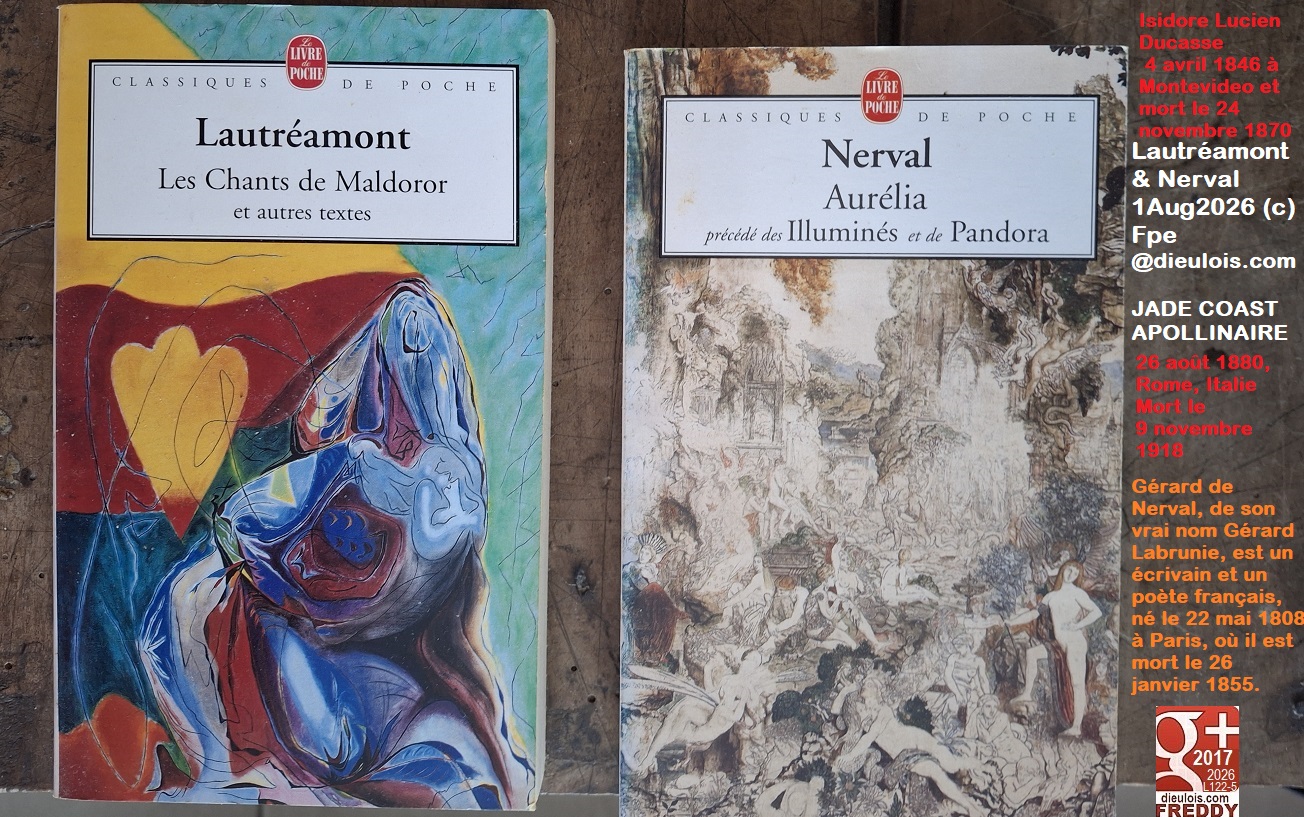
His masterpiece Aurélia (1855) is a hallucinatory account of his breakdowns, blending dream, myth, and reality.
In Les Filles du Feu and his sonnets (Les Chimères), Nerval explored the fantastique through alchemy, ancient myths, and occult symbolism.
His spleen is elegant and melancholic — a constant mourning for lost love and a lost golden age.
He famously walked his pet lobster on a blue ribbon in the Palais-Royal, declaring it “quiet and serious, and knows the secrets of the sea.”
Found hanged in 1855, his death remains one of the great tragic symbols of poetic madness.

Comte de Lautréamont (1846–1870): The Prophet of Cruel Beauty and Chaos
Isidore Ducasse, writing as Comte de Lautréamont, produced one of the most
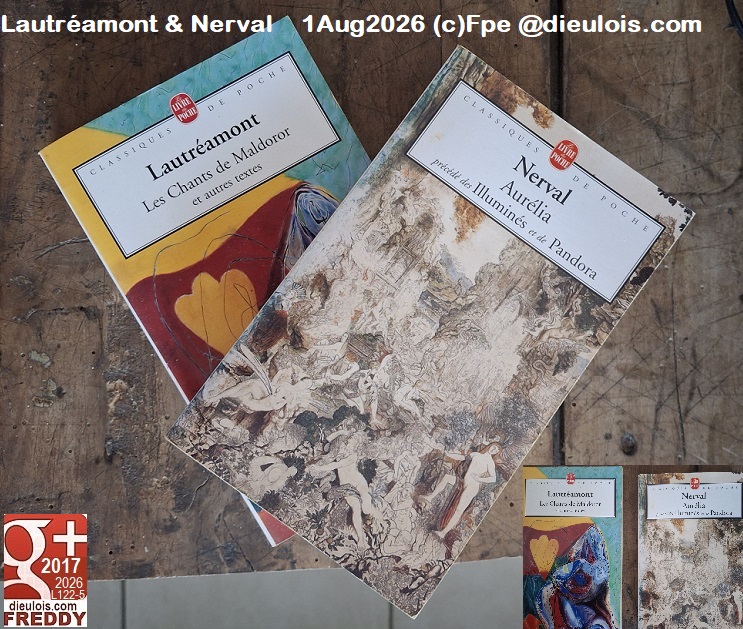
shocking works in French literature: Les Chants de Maldoror (1868–1869).
At only 22–24 years old, he created a nightmarish epic of rebellion against God and humanity.
Maldoror, his anti-hero, is a figure of absolute evil and poetic grandeur.Lautréamont’s style is explosive, sarcastic, and hallucinatory.
He masters the fantastique through grotesque imagery, blasphemy, and surreal violence (most famously the encounter between a schoolboy and a shark).
His spleen is ferocious and nihilistic. He died at 24 in obscure circumstances (probably suicide or illness),
leaving behind a work that would deeply influence the Surrealists, especially André Breton, who called him “the absolute poet.”

Guillaume Apollinaire (1880–1918): The Modernist Bridge Between Madness and Innovation
Wilhelm Albert Apollinaris de Kostrowitzky, known as Guillaume Apollinaire, was the great innovator who carried the torch into the 20th century.
Wounded in World War I (he was trepanned after a head injury), he died in 1918 during the Spanish flu epidemic.
Apollinaire blended spleen and the fantastique with modernity. In Alcools (1913) and Calligrammes (1918),
he invented visual poetry, mixed high and low culture, and celebrated both love and melancholy.
Poems like “Le Pont Mirabeau” express a deep, modern spleen, while “Zone” and “La Chanson du Mal-Aimé” mix eroticism, nostalgia, and visionary madness.
He coined the term “Surrealism” before Breton claimed it, acting as a vital link between 19th-century visionary poetry and the avant-garde.
Common Threads: Spleen, Fantastique, and Folie
Spleen: All three expressed a deep, incurable melancholy — Nerval’s nostalgic, Lautréamont’s rebellious, Apollinaire’s modern and urban.
The Fantastic: They blurred the line between reality and dream, myth and nightmare.
Nerval through occult symbolism, Lautréamont through grotesque horror, Apollinaire through playful surrealism.
Madness: Each danced dangerously close to it.
Nerval and Lautréamont paid the ultimate price, while Apollinaire’s war wound and bohemian life brought him close to the edge.
DifferencesTone:
Nerval is melancholic and mystical; Lautréamont is violent and provocative;
Apollinaire is sensual, innovative, and often joyful despite the spleen.
Form: Nerval remained relatively classical in form. Lautréamont used long, prose-like verses.
Apollinaire shattered traditional form with calligrams and free verse.
Worldview: Nerval sought spiritual reconciliation. Lautréamont declared war on creation.
Apollinaire embraced the modern world with curiosity and love.
These 3 poets remind us that great art often emerges from the border between genius and madness.
They transformed personal torment into universal beauty and continue to influence literature, Surrealism, and modern poetry more than 150 years later.
Rest in peace, you tormented visionaries.
Your spleen still speaks to us, your fantastic worlds still enchant us,
and your beautiful madness still illuminates the night.
< B > My Personal Blog < B > List of all my Blog posts < B >
Article generated & inserted in SQL tables by AIs

FREDDY FRANCE Blog personnel
(c)FPe COPYRIGHT @FPDIEULOIS 2026