 The Guns of Navarone: Gregory Peck’s Charismatic Leadership, and the Frigates’ Final Sirens
 by FPDieulois :: 2026-03-07
with help of xAI Grok
The Guns of Navarone (1961), directed by J. Lee Thompson, is an enduring war adventure classic and—most importantly—my father’s all-time favorite film.
Every time we watched it together on Sunday afternoons, he would sit a little straighter during the final scenes, eyes fixed on the screen,
quietly moved by the same moments that still resonate with me today.
Adapted from Alistair MacLean’s novel, the movie combines high-stakes suspense, breathtaking Aegean locations,
and a cast led by the incomparable Gregory Peck, whose quiet authority carries the entire mission.
Gregory Peck’s Charismatic Leadership: The Anchor of the Mission
Captain Keith Mallory (Peck) is the heart and soul of the film.
A New Zealand mountaineer turned reluctant commando, he exudes calm competence and moral clarity even when everything goes wrong.
Peck brings an effortless gravitas: the measured voice, the steady gaze, the way he never raises his voice yet commands absolute attention.
Whether scaling the sheer cliffs of Navarone under enemy fire or making impossible
decisions about wounded comrades, Mallory never loses his humanity.
Peck’s performance is understated yet magnetic—he makes leadership feel like a burden willingly carried,
and that quiet charisma is why the character remains so memorable.
The Aegean Setting and the Relentless Mission
The film follows a small Allied team sent to destroy two massive German coastal guns
on the fictional Greek island of Navarone before they can annihilate a British convoy.
The journey is brutal: shipwreck, betrayal, torture, betrayal again, and a final assault up impossible cliffs.
Shot on Rhodes and in Shepperton Studios, the Aegean landscapes—rugged coastlines, turquoise waters, stark white villages—give the story an almost mythic scale.
The guns themselves, towering and menacing, become a character: silent until they speak in thunder.
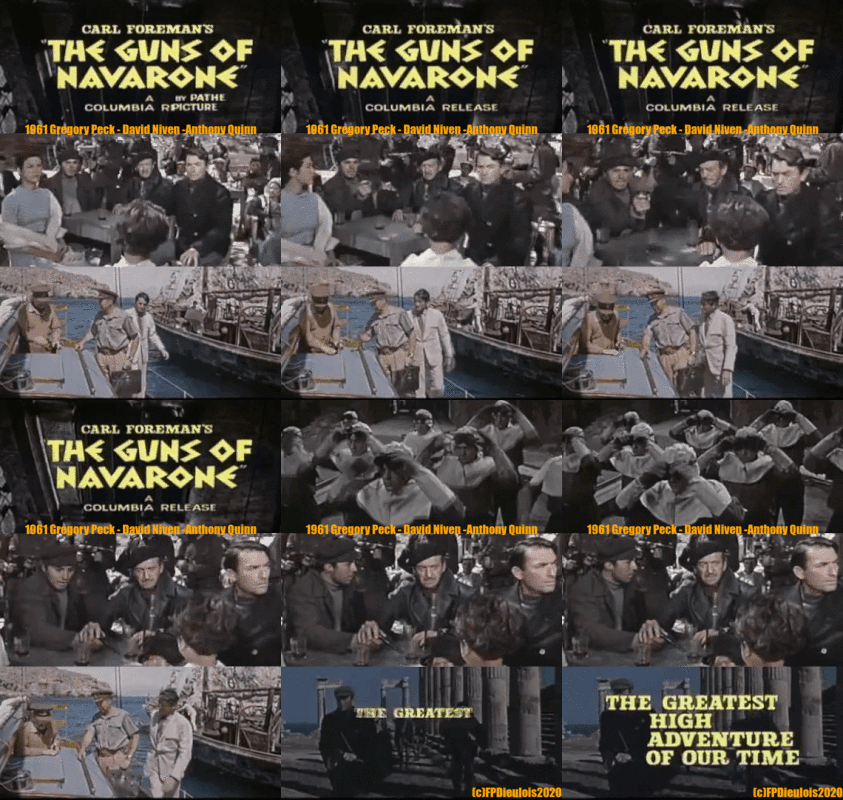
The Sirens of the Frigates at the End: A Poignant Tribute
The final sequence is unforgettable. After the guns are destroyed and the surviving commandos escape by boat, the British frigates steam into the strait.
As they pass the smoking ruins of Navarone, every ship sounds its siren in a long, mournful salute. It is not a victory cheer—it is a tribute.
The deep, overlapping horns echo across the water, honoring not only the success of the mission but every man who died along the way:
the ones who fell on the cliffs, the ones executed, the ones who never made it off the island.
My father always waited for that moment. He never said much, but I could see it in his face: the recognition that real courage often ends in silence,
and that the living owe the dead a moment of sound.
The Guns of Navarone is more than an action film; it is a story of duty, sacrifice, and the cost of victory.
Gregory Peck’s Mallory carries that weight with dignity, the Aegean provides the epic stage,
and those final sirens remind us why we remember the film decades later.
For my father, it was the perfect movie—heroism without arrogance, loss without despair, and a salute that still echoes.

with help of Google Gemini
< B > My Personal Blog < B > List of all my Blog posts < B >
Article generated & inserted in SQL tables by AIs

FREDDY FRANCE Blog personnel
(c)FPe COPYRIGHT @FPDIEULOIS 2026